Geo-exchange systems use stable underground temperatures to heat and cool buildings, and the Canadian GeoExchange Coalition (CGC) leads national training, quality assurance, and market development to expand this low-carbon technology across Canada.
Its work supports Canada’s 2025 climate goals through updated standards, industry coordination, and participation in federal decarbonisation initiatives.
At a glance, CGC focuses on:
- developing and delivering national geo-exchange training programs
- supporting quality assurance and system certification
- advancing geo-exchange adoption through policy engagement and industry partnerships
Together, these efforts position CGC as a central contributor to Canada’s modern geothermal and clean-energy landscape.
While CGC focuses primarily on ground source heat pump and geo-exchange systems, another major organisation has played a central role in advancing geothermal power and direct-use projects across Canada – the Canadian Geothermal Energy Association (CanGEA). Together, these organisations have helped shape the broader geothermal landscape in the country. Although CGC and CanGEA have operated in different segments of the geothermal sector, their work has often complemented each other, with CGC advancing geo-exchange adoption while CanGEA, now Geothermal Rising Canada, leads policy and research for deep geothermal and power applications.
Broader Sector Update for 2026: CanGEA Becomes Geothermal Rising Canada
As of January 15, 2025, the Canadian Geothermal Energy Association (CanGEA) was acquired by Geothermal Rising and rebranded as Geothermal Rising Canada. This transition does not replace the role of CGC but rather strengthens the wider geothermal ecosystem by unifying geothermal advocacy across North America under the Geothermal Rising umbrella.
Geothermal Rising Canada continues nearly two decades of CanGEA’s policy and regulatory work, while gaining access to the expertise, networks, and research capacity of the international Geothermal Rising organisation. Its goals now include amplifying the momentum of geothermal technology adoption, organising knowledge-sharing events, empowering Indigenous voices through initiatives such as the Indigenous Geothermal Symposium, and supporting preparations for the World Geothermal Congress (WGC) 2026 in Calgary.
Online Casinos as a Modern Field Supporting Renewable Energy
Online casinos, which are among the most profitable and innovative on the market, are becoming key players in promoting renewable energy technologies in Canada. For example, the best real-money online casinos among this year’s top recommendations invest in eco-friendly data centers powered by wind, solar, and geothermal systems, develop environmentally friendly offices, and implement green marketing and rewards programs. Here are a few examples of their cooperation:
- Green Partnerships: Collaboration with wind and solar energy suppliers.
- Carbon Offset: Funding reforestation projects.
- Sustainable Promotion: Campaigns to raise awareness about renewable energy.
- Transparent Blockchain: Using blockchain technology for transparency.
- Eco Certifications: Obtaining labels for eco-friendly offices and data centers.
Through CSR initiatives, these platforms fund renewable projects, maintain transparency in sustainability efforts, and educate players about renewable energy. By partnering with renewable energy firms and utilizing blockchain for transparency, online casinos not only reduce their carbon footprint but also attract eco-conscious consumers, setting a new standard in the industry.
As this responsibility framework expands, many companies now look at trust and user protection with the same level of scrutiny they apply to environmental practices. When readers compare these practices with independent assessments of the safest online casinos in Canada, they can follow a protection-oriented review shaped for Canadian readers to see how different sites are examined for security levels, data safeguards, payment clarity, and overall user trust.
This broader shift toward accountability in the digital sector mirrors the way energy-focused organisations explore long-term, low-impact technologies that support Canada’s sustainability goals, such as modern geo-exchange systems.
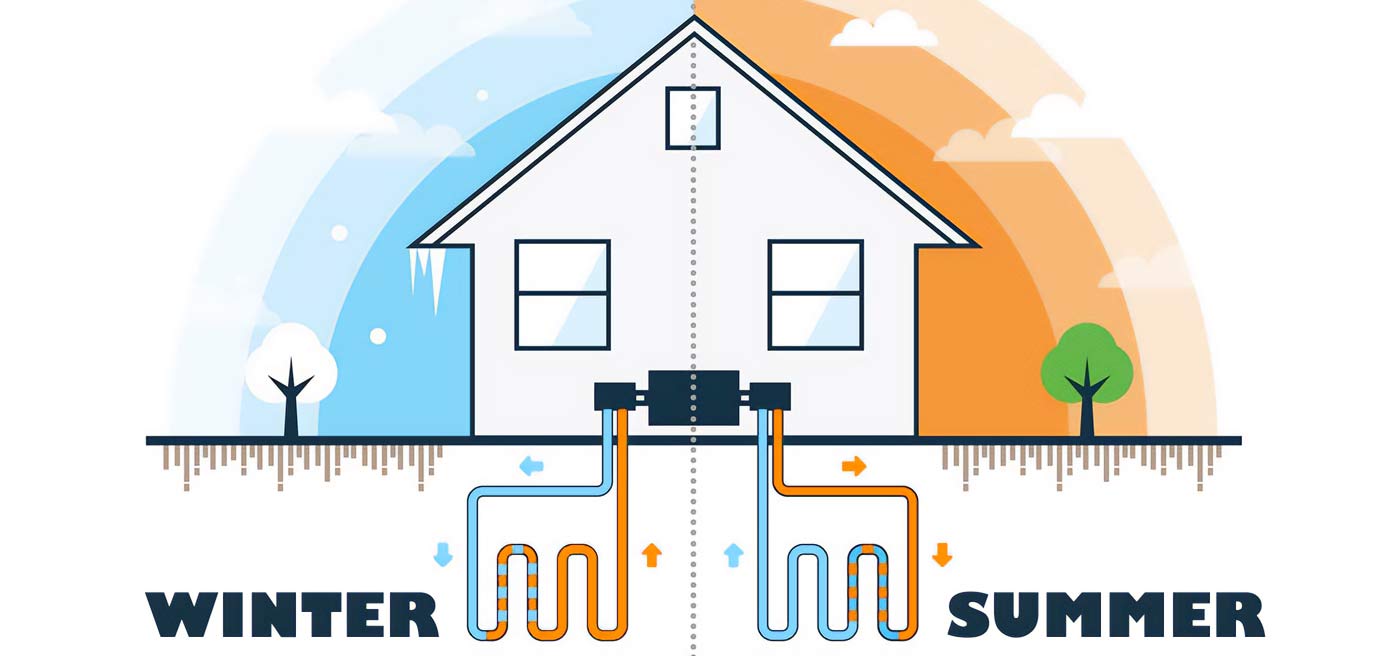
Why Geothermal Systems Are Necessary
Geo-exchange systems, also known as ground source heat pumps, are an innovative renewable energy technology that uses the stable temperatures of the ground or water to heat and cool buildings extremely efficiently. With climate change and rising energy costs becoming major concerns, geo-exchange systems provide a sustainable and cost-effective solution for heating and cooling homes and commercial buildings in Canada. The CGC aims to unite industry stakeholders, provide quality training and assurance, educate consumers, and transform the HVAC market to mainstream this technology nationwide. Moreover, modern entertainment sectors, including online gambling, collaborate with CGC to invest in green energy solutions to offset their carbon footprint and support a more sustainable future.
Historical Background
In 1999, Natural Resources Canada commissioned a comprehensive study to develop a geo-exchange market development strategy for Canada. This proposed creating an inclusive industry alliance to foster collaboration and coordinated action to significantly expand the industry.
Based on this, the Canadian Electricity Association, along with industry players and supported by Natural Resource Canada’s Renewable Energy Deployment Initiative, moved forward to incorporate the Canadian GeoExchange Coalition (CGC) as a non-profit entity in June 2002.
The initial mandate focused on uniting public and private sector stakeholders, providing information and training, overcoming barriers to market penetration, and dramatically accelerating the growth of geo-exchange systems across Canada. Since 2014, CGC has continued to participate in federal consultations on low-carbon heating, contributing technical input to programs such as the Greener Homes initiative and early discussions around Canada’s 2030 Emissions Reduction Plan.
Mission and Mandate of CGC
The CGC’s mission is to promote awareness and proper deployment of geo-exchange technology nationwide. Its mandate includes:
- Uniting private and public sector stakeholders to collaborate on market expansion.
- Increasing mainstream consumer awareness about the benefits of geo-exchange.
- Expanding the overall ground source heat pump market in Canada.
- Addressing major barriers like high upfront costs, lack of infrastructure and consumer confidence.
- Accelerating market penetration, especially in the commercial sector.
- Supporting the growth of Canadian geo-exchange businesses and jobs.
As of 2026, CGC continues to serve as Canada’s primary organisation dedicated to ground-source heat pump and geo-exchange deployment, providing training, quality assurance, and market support aligned with national net-zero policies. With the creation of Geothermal Rising Canada, national coordination for deep geothermal and power applications expanded to include a dedicated Canada Geothermal Rising Policy Council (Canada GRPC). This council brings together policymakers, developers, researchers, Indigenous representatives, and industry partners to form a unified national voice for geothermal energy.
Strategic Approaches and Achievements
In its first decade, the CGC focused strongly on building up the industry infrastructure and professional standards needed to transform the market.
Strategies included:
- Developing comprehensive national training programs and materials
- Implementing installer/designer certification and accreditation
- Establishing the CGC Global Quality GeoExchange Program for assurance
- Collaborating with NRCan on training and quality assurance initiatives
- Consulting widely to develop certification standards and regulations
- Educating consumers and influencing government energy policies
This has led to substantial progress – over 8,000 trained, 800 accredited experts, and 18,000+ certified residential installs. The CGC continues to build on these efforts to mainstream the technology across Canada. Between 2015 and 2024, the demand for ground-source heat pump systems increased steadily as provinces adopted new efficiency standards, with CGC providing updated training modules and quality-assurance guidance to support this growth.
CGC’s Corporate Structure
The Canadian GeoExchange Coalition is a federally incorporated non-profit entity established on June 17, 2002.
It is governed by a Board of Directors elected by members, which guides the overall management. Operations are led by the President & CEO and supported by an Executive Committee.
Currently, the CGC has over 80 corporate members located across most Canadian provinces participating in the ground source heat pump industry.
In recent years, CGC’s membership base has diversified, with more HVAC firms, engineering companies, and municipal authorities joining in response to Canada’s 2025 low-carbon building priorities.
Membership Benefits and Involvement
Key benefits of CGC membership include:
- Access to marketing materials, research, and informational resources
- Referrals for contractors and partnership opportunities
- Invitations to workshops, networking events, and conferences
- Enhanced corporate profile and credibility via affiliation
- Input into advocacy efforts and submissions to the government
- Business development support to complement core offerings
Members play an important role in providing input to market development initiatives, collaborating on pilot projects, supporting CGC submissions to policymakers, and integrating geo-exchange into their product and service offerings. From 2020 onward, member involvement has expanded to include participation in federal decarbonization consultations, regional electrification studies, and collaborative research aligned with the Net-Zero 2050 agenda.
Vision and Strategies for Market Transformation
The CGC has an ambitious vision to transform the HVAC market in Canada by:
- Mainstreaming geo-exchange technology in new builds and retrofits.
- Growing the industry to support members in enhancing revenues.
- Facilitating business partnerships and outsourcing.
- Improving national environmental performance.
- Reducing greenhouse gas emissions from the building sector.
This requires addressing barriers like high initial costs, limited infrastructure, and low consumer awareness and confidence.
Key pillars of their approach include upgrading industry infrastructure, disseminating information to consumers and policymakers, and ongoing advocacy efforts with government decision-makers.
CGC Training Program
To address the capacity barrier, the CGC has developed an extensive geo-exchange training program covering:
- Residential and commercial system design
- Installation and drilling
- Heat load calculations and pipe fusion
- Municipal inspector training
- Direct expansion geothermal setups
Offering Continuing Education Unit (CEU) credits, the curriculum focuses both on fundamentals and best practices to deliver quality assurance. Course completion certificates are awarded.
For accreditation, additional professional experience and favourable endorsements are required to ensure competency. Ongoing learning requirements also exist to maintain active accreditation over time.
Events and Advocacy
The CGC hosts an annual national industry forum to facilitate dialogue on technical advancements, system optimization, financial incentives, regulatory changes and best practices.
Its GeoCity initiative recognizes municipalities that actively encourage quality geoexchange deployments through the adoption of supportive policies, permit streamlining, tax breaks, cash incentives and public outreach.
The CGC also engages routinely with policymakers across provinces and federally to advocate for enhanced incentives, favorable regulations and broad-based market transformation initiatives.
The 6th Annual Excellence Awards honoured innovative projects, including Helen Gorman Elementary School and the Cornerstone Housing retrofit.
Since 2019, CGC has also contributed insights to national building-code updates and provincial retrofit strategies, positioning geo-exchange systems as a core component of Canada’s long-term decarbonization pathway.
What is GeoExchange?
GeoExchange refers to ground source heat pump systems that leverage the constant temperatures beneath the earth’s surface to heat and cool spaces. The earth’s soil or bodies of water act as a “heat source” or “heat sink,” depending on the season.
Compared to traditional HVACs, benefits include:
- Energy savings of 30-70%
- Lower operating and maintenance costs
- Qualifies as renewable energy
- Reduces carbon footprint
- Takes up less indoor space
GeoExchange is an ecological, cost-effective technology for both residential and commercial buildings in Canada.
What is Geothermal Energy?
Geothermal refers to the solar energy passively collected and stored by the ground and water. Below a few meters of soil, the earth’s temperature stays fairly constant year-round.
GeoExchange systems work by circulating water or anti-freeze solutions via underground piping to transfer heat to/from the soil or bodies of water. This geothermal loop connects to a heat pump, which concentrates the earth’s energy to heat and cool indoor spaces.
Two main loop systems exist:
- Open loops that utilize nearby ponds or wells
- Closed loops with buried underground piping
In essence, GeoExchange uses free, renewable heat available just under the surface instead of burning fossil fuels.
Costs and Economics of GeoExchange Systems
GeoExchange systems have higher upfront capital costs but lower operating expenses compared to traditional HVACs.
Key economic considerations:
- Energy savings often make up the initial premium in under 10 years
- Lower maintenance than air-source heat pumps
- Expected life of over 20 years for heat pump, 50+ years for loops
- Future energy inflation improves projected savings
- In 2023 alone, global geothermal investment surpassed $47 billion, supporting more than 140,000 jobs worldwide. This rapid growth is shaping Canada’s 2025 geothermal landscape, reinforcing the need for unified advocacy and modernized regulation.
Canada’s own geothermal and geo-exchange deployment has accelerated in parallel, supported by rising carbon prices and growing interest from large building owners seeking long-term energy stability.
CGC’s Impact and Market Transformation
Through its first decade of accelerated efforts, the CGC has begun to drive a notable market shift:
- Over 50 million in government deployment incentives secured
- Tax code changes allowing commercial ITC incentives
- Mainstream corporate participation from utilities and fuel companies
- Double-digit annual growth in residential installs
- Increased availability of geoexchange system components
- Greater public awareness of benefits and qualified vendors
- Higher confidence levels due to certified quality assurance
The cumulative impact of the CGC’s multi-faceted approach aims to reach a tipping point for mass adoption of geoexchange technology. With the transition to Geothermal Rising Canada, the sector enters a new phase of national coordination. Increased policy attention, growing Indigenous leadership, university-driven pilot projects, and renewed global interest position Canada to expand its geothermal heat and power capacity significantly in the coming years. By 2025, CGC’s role includes supporting municipalities integrating ground-source systems into community energy plans and promoting the technology as a pillar of local net-zero strategies.
Publications and Reports
The CGC periodically produces state-of-the-industry reports like:
Ten Years of Progress and Achievement, 2002-2012
It holds an online library of technical specifications, performance data, policy submissions, and milestone reports for member access. These helps inform decision-making and standardization efforts across the industry.
A Buyer’s Guide for Residential Ground Source Heat Pump Systems, 2009
It covers the operation, benefits, installation considerations, contractor selection, system design, and maintenance of these eco-friendly systems for both new and existing homes. The guide aims to provide essential knowledge for making informed decisions about ground source heat pump installation.
The state of the Canadian geothermal heat pump industry 2010: industry survey and market analysis, November 2010
The report presents an in-depth analysis and survey of the Canadian geothermal heat pump industry, covering various aspects like market size, growth, environmental benefits, system types, prices, and industry capacity.
Renewable Heat Workshop – Integrating Solar & Heat Pumps, 2013
It is a presentation from a Renewable Heat Workshop conducted by Bill Wong from SAIC and Jeff Thornton from T.E.S.S. on January 31, 2013. It discusses various aspects of integrating solar energy and heat pump technology, focusing on the Drake Landing Solar Community (DLSC) in Okotoks, Alberta, Canada, and other related studies.
The State of the Canadian Geothermal Heat Pump Industry 2011, February 2012
The report was published by the Canadian GeoExchange Coalition (CGC) in 2012. It presents an in-depth analysis of the industry, including trends, market dynamics, pricing, and system types.
Direct expansion systems are now eligible under the ecoENERGY Retrofit – Homes program, November 2009
This program was designed to encourage homeowners to make energy-efficient retrofits to their homes, and the inclusion of direct expansion systems expanded the range of technologies and improvements eligible for support under this initiative. More recent technical briefs and digital resources produced between 2014 and 2025 are available through CGC’s online library, reflecting updated standards, performance data, and modern deployment practices.