By 2026, the story of Italian Canadians declared enemy aliens during the Second World War has moved from whispered family memory into a recognized chapter of Canadian civil rights history. Over 31,000 Italian Canadians were labelled enemy aliens under the War Measures Act, and approximately 600 men were torn from their homes and held in Italian internment camps across the country. None were formally charged. Most were released within two years. Yet the damage – to families, livelihoods, and identity – echoed for generations. Today, as Canada continues to reckon with its wartime treatment of minority communities, this history feels more urgent than ever.
Related quick facts:
| Detail | Information |
|---|---|
| Project | Italian Canadians as Enemy Aliens: Memories of WWII |
| Led by | Columbus Centre, Toronto |
| Archive | 1,000+ items, 86 oral histories |
| Enemy aliens registered | 31,000+ Italian Canadians |
| Men interned | ~600 |
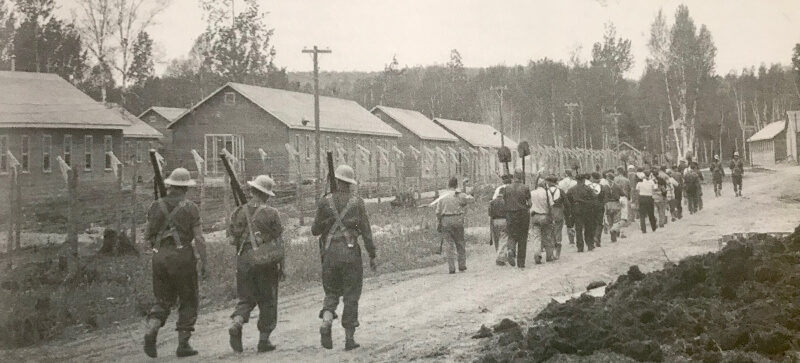
| Internment sites | Petawawa (ON), Kananaskis (AB), Fredericton (NB) |
| Redress request | National Congress of Italian Canadians, 1990 |
| Federal response | ACE Program (2005), later CHRP Program |
Key Statistics at a Glance
| Internment Camp | Province | Est. Capacity | Notable Internees |
|---|---|---|---|
| Camp Petawawa | Ontario | 700+ | Leo Mascioli, musicians, professionals |
| Camp Kananaskis | Alberta | 700+ | Miners, labourers from western Canada |
| Camp Fredericton | New Brunswick | 300+ | Businessmen, community leaders |
Understanding what an internment camp means in the Canadian context is essential: an internment camp was a detention facility operated by the government to hold individuals deemed a national security risk – without trial, without charge, and often without clear evidence. During internment camps WW2 operations across the country, thousands of Canadians of Italian, German, and Japanese origin were detained under the War Measures Act. These facilities were distinct from prisoner-of-war camps and housed civilian residents, many of them Canadian citizens or long-time permanent residents.
Some stories stay hidden for decades, even when they live inside a community as large as the Italian Canadian one. For years, families whispered about what happened in June 1940, when Benito Mussolini declared war and, within minutes, thousands of people in Canada were labelled enemy aliens WW2 Canada. They were gardeners, miners, musicians, professors, waiters, stonemasons, and businessmen. Ordinary people.
By the end of that first chaotic summer, 31,000 Italian Canadians had been officially listed as “enemy aliens,” and roughly 600 men were taken to Italian internment camps across Canada. Few were given reasons. None were charged. As Italian headlines later summarised it: “Nei campi canadesi finirono 600 italiani”.
The roots of this crisis stretched back decades. The story of Italian immigration to Canada spans the late 19th and early 20th centuries, when thousands of Italians arrived seeking work in mines, on railways, and in construction. Communities took shape in Toronto, Montreal, Vancouver, Trail, and smaller towns like Timmins. By 1940, these were established families – some Canadian-born – who found their loyalty suddenly questioned because of the country of their ancestors.
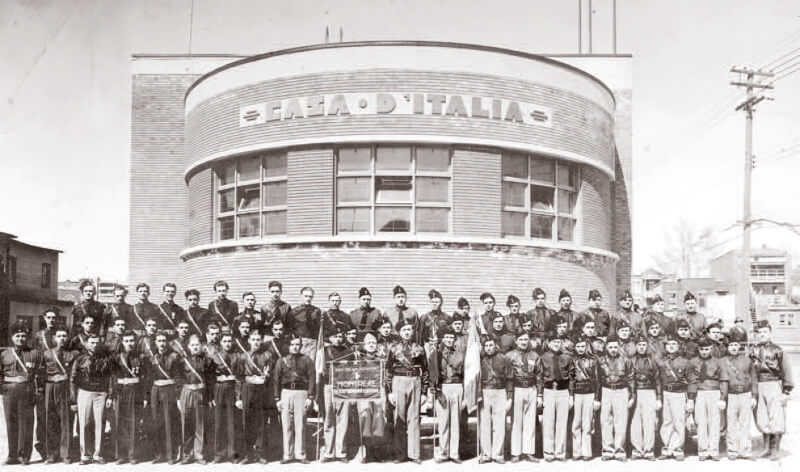
The rise of fascism (or fascisme, as it was known in French-speaking Canada) in Europe cast a long shadow over these communities. Italian-language newspapers, cultural clubs, and even church murals had, during the 1930s, reflected some sympathy toward Mussolini’s Italy – a sympathy that was often more about cultural pride than political allegiance. When war came, this complicated history was weaponised against ordinary people.
At the Columbus Centre in Toronto, this part of the community’s history had long been felt but rarely discussed openly. Older relatives mentioned the fear and those dark years, or in Italian “la paura” and “gli anni bui”, but only in passing. Photographs from Vancouver, Trail, Montreal, Windsor, Toronto, and Timmins held the weight of those years. The idea for a national project grew from a simple desire: to preserve the stories before they faded, and to help younger generations understand why some grandparents stayed quiet.
That idea became Italian Canadians as Enemy Aliens: Memories of World War II – a multi-year initiative to gather testimonies, documents, and community history, and to help answer a question many families never dared ask: What truly happened to us?
The Team Who Brought the Past Back into View
Every large project begins with a few people who feel the weight of a story and decide it deserves to be heard. At the Columbus Centre, that responsibility fell first to Lucy Di Pietro. Families often say she had a calming presence, giving them space before they shared memories tucked away for decades. She shaped the interviews, held emotional conversations, and helped relatives trust the process.
Historian Dr. Travis Tomchuk worked beside her, moving through archival files to piece together the wider world these families experienced – the War Measures Act, the political tension of the era, and the rise of fascism. His work helped bridge personal accounts with the historical record.
Archivist Stefanie Petrilli became the guardian of fragile things: old diaries, ID cards stamped “enemy alien,” and photographs from Vancouver, Trail, Toronto and beyond. She digitised hundreds of items so they could be shared without risking the originals.
Louanne Aspillaga supported the human side of the archive – answering calls, guiding families through the process, and helping them understand how their stories fit into the larger collection.
The Creative Circle
The digital designers, including Kevin Robb, Rachelle Au, Scott Cameron, and the Savoury team, turned boxes of documents into an online archive people could navigate. Translators worked quietly in the background, making sure memories shared in English, Italian or French kept their tone and emotion.
It grew into a community effort: archivists from Ontario, scholars from Quebec, community leaders from BC, teachers from Alberta, and elders who sat with the team and said, “Maybe it’s time we talk about this.”
From Memory to Digital Trust
The Italian Canadians as Enemy Aliens project reminds us that trust and transparency are the foundations of shared history. Preserving memory requires honesty – the same quality that shapes how Canadians interact online today.
In a world where archives live on screens, digital participation has become part of our collective culture. Families once gathered around kitchen tables; now they gather around virtual spaces – to remember, learn, and sometimes simply to relax. Whether through a community archive or an online platform, the act of engagement still depends on fairness and integrity.
Safe and Licensed Online Gambling in Canada
Canada’s digital culture extends beyond learning and storytelling to include responsible entertainment. Licensed online casinos operate under clear provincial regulations such as those set by AGCO and iGO in Ontario, ensuring that games are fair, private data is secure, and players have access to self-exclusion and deposit-limit tools.
Like archivists who safeguard fragile letters, regulators protect the balance between enjoyment and responsibility. In both worlds – memory and play – the same principle applies: trust built through accountability.
Voices That Guided the Work
The project also relied on a circle of advisors who ensured the story stayed accurate and grounded. Scholars like Dr. Adriana Davies, Prof. Ernesto Virgulti, Steven High and Nicholas DeMaria Harney offered context on internment camps Canada, the political climate of 1940, and the shape of Italian immigration to Canada.
Community members such as Nancy Bertolotti, Gina Valle, Fabiano Micoli and Viola Arends added the kind of details official records never include – who appeared in a photo, why a letter was saved, or how different regions responded to fear. They explained old terms like “internati”, “nemici”, and “campi”, phrases still used by older generations.
Interviews with figures like Andy Donato added another layer, blending humour, reflection, and the blunt honesty many second-generation Italian Canadians use when speaking about those years. A cartoonist and journalist of Italian heritage, Andy Donato brought a rare combination of wit and lived cultural memory to the project, helping bridge the gap between community experience and public discourse.
Moments That Stayed with the Team
Some moments were unforgettable. A volunteer recognised the Iannuzzi family in a 1930s image. Someone else pointed at a name in the list of the internees (in Italian, Elenco degli internati), and said softly, “That was my nonno,” or in English, my grandfather. These small connections helped ensure the final archive reflected the people behind the history, not just the events.
These voices didn’t just support the project – they shaped its heart.
Gathering Stories from Families Across Canada
Over several years, the team travelled to living rooms and community halls across the country, recording more than 86 oral histories. These memorie orali (as many Italian Canadians still call them) became the heart of the project.
Families shared the Portrait of Leopoldo (Leo Mascioli), a man who helped build much of Timmins and stands as one of the most prominent figures associated with the Camp Petawawa internment. His granddaughter, Sandra Raffaella Stirling O’Grady, recalled how he came home from Camp Petawawa with white hair, although he had left with black hair.
“He sat in the vestibule,” she said in her interview, “and his shoulders were shaking. I’ll never forget that night.”
Leo Mascioli’s story is emblematic of how internment struck at the very heart of Italian Canadian community leadership. A successful entrepreneur who had invested deeply in northern Ontario, Mascioli was taken not because of any criminal act, but because of his background and associations. His case remains one of the most cited examples of the human cost of the enemy aliens WW2 Canada policy.
The archive also holds rare photographs of the Girardi family – Attilio and Bruno Girardi in 1935, and later Bruno Girardi in 1942, after arrests began on the West Coast. Bruno’s son, Attilio Girardi, would later say in a taped interview, “You don’t even say you’re sorry. Not once.”
Other families shared images like the Magi family at New Year’s, 1950, rebuilding life after hardship; and materials from the Boccini and Nincheri families, which appear in interviews such as “Entrevue avec Roger Boccini Nincheri”, recorded on July 21, 2011. Some talked about the Gulch Trail BC community, where Italian immigrants lived close to the mines and the railway lines. In Trail, British Columbia, the tight-knit Italian enclave known as the Gulch was home to miners and their families who worked the smelter operations. When internment began, the Gulch Trail community was shattered – men taken, wives left to manage households alone, children left to wonder when, or if, their fathers would return.
Some families, like the relatives of Dr. Donato Sansone, brought forward letters and photographs that revealed how professional life and community standing offered little protection once the arrests began.
One of the most telling documents was the file of Joseph Visocchi, whose wife and seven children received just $11.83 per month in government relief while he was interned. The file, titled Necessitous Dependents of Interned Enemy Aliens, reveals how deep the economic impact of internment was.
Through these stories, the archive captures not just policy, but the human cost.
Objects That Speak for Themselves
More than 1,000 archival items now form the digital collection. Some are striking. Some are painfully ordinary. All carry meaning.
The Photograph of Bruno Girardi, the banquet held for Emilio Goggio in 1931, and the Mussolini bust by Charles Marega found in Vancouver add layers to the wider political landscape of the period. The bust hints at a complicated past. So does the famous fresco in the Church of the Madonna della Difesa in Montreal, where Mussolini appears on horseback in a corner of the mural. Families still debate what that image represents.
Images of Adrien Arcand sitting at his desk in uniform remind us that fascist sympathisers existed within Canada, something historians often cite when explaining why the government used the War Measures Act so aggressively.
Among quieter items are small letters written from camp, church bulletins from the late 1930s, ID cards stamped “enemy alien,” and photos of Vancouver’s Italian community before the war. These family objects (“oggetti di famiglia”, translated from Italian) hold the emotional truth of the era.
Inside the Exhibits: From Petawawa to the Columbus Centre
The Columbus Centre turned this vast research effort into two major exhibitions.
The Permanent Exhibit in Toronto
Designed by Sheila Dalton, the gallery combines timelines, recorded memories, and artefacts. You can stand in front of the list of internees and feel the weight of each name. Panels touch on themes like the rise of fascism, Italian immigration to Canada, the internment years, and Italian Canadians today, showing how the community changed after 1945.
The Travelling Exhibit: Ordinary Lives, Extraordinary Times
Curated by Alison Kenzie, this exhibition toured museums from BC to Ontario. Along the way, it connected with descendants who had never seen their family history acknowledged publicly.
Some panels addressed the broader civil-liberties landscape, including references to the FLQ Crisis decades later, when Canada once again debated state power and individual rights. The parallels were not lost on Italian Canadian families: the War Measures Act invoked against them in 1940 was the same legislation applied during the FLQ Crisis of October 1970, underscoring how extraordinary wartime powers could reach across generations and across communities.
Every stop reinforced how deeply these stories resonate, even with people whose families weren’t directly affected.
The work also carried into community events. At the 2011 Venetian Ball – Songs of Hope, descendants and supporters highlighted how remembrance can coexist with celebration, honouring those who lived through internment while looking toward a more open future.
Stories That Stayed with the Team
Certain memories are impossible to forget.
One comes from the Pantalone family. Sal Pantalone recalled the night his father returned from internment: late January, cold outside, a knock at the door.
“He had a white head,” Sal said. “He didn’t have a white head when he went in.” That detail alone carries a whole year of fear.
Another is from Vancouver, where families stood on a bridge waving handkerchiefs as RCMP trucks carried men to holding sites. They couldn’t speak to them. They could only hope the men noticed the white fabric in the wind.
There were stories of mothers going to the Custodian of Enemy Property to ask for access to their own bank accounts. Some, like the Visocchi family, were refused until their assets were consumed.
Some memories were quieter but still powerful – like the Iannuzzi family describing their father’s difficulty finding work after his release, or the Battista family recalling how neighbours avoided them for months.
Many families also spoke about parallels with German Canadians during WW2, who faced similar suspicion, registration requirements, and internment under the same War Measures Act. Like Italian Canadians, German Canadians during WW2 found themselves caught between loyalty to their adopted country and the stigma of their ancestry. An estimated 850 German Canadians were interned during the war, many of them Jewish refugees who had fled Nazi Germany – making their detention one of the more tragic ironies of the era. These shared histories underline that wartime suspicion was applied broadly, and that no single community bore its weight alone.
These aren’t just historical scenes. They’re family memories carried across generations.
The Debate Around Redress and Recognition
The archive includes a thoughtful section called Redress and Apology. Opinions vary widely.
Some, like Attilio Girardi, felt strongly:
“You have an obligation to the children of internees. Not even a thank you. Not even a sorry.”
Others believed that time had passed: “I wouldn’t expect compensation,” said Nellie Cavell, who was declared an enemy alien in Vancouver.
The National Congress of Italian Canadians requested compensation in 1990. A federal educational fund, the ACE Program, was created in 2005. It wasn’t the formal apology many hoped for. Funding later shifted to the CHRP Program.
As of 2026, a formal government apology specifically addressing the internment of Italian Canadians under the enemy aliens WW2 Canada policy remains outstanding. Advocacy groups continue to call for recognition on par with the apologies extended to Japanese Canadians in 1988. For many families, the question is no longer about money – it is about being seen in the country’s official memory.
Even now, some community members say “è troppo tardi”, meaning it’s too late. Others think any form of recognition can still bring comfort.
Why This Project Changed How We Remember
What the Columbus Centre built is more than an ordinary project. It’s a bridge between generations.
Teachers use it to discuss civil rights in Canada. Families use it to understand why their “nonno” changed jobs in 1940 or why certain topics were off-limits at family dinners. Historians cite it when discussing wartime Canada, state power, and minority communities.
Most importantly, it gives Italian Canadians space to see themselves in the country’s broader story. It shows resilience, pain, humour, rebuilding, and identity all at once.
In 2026, as conversations about rights, identity, and the treatment of minority communities during times of national crisis continue to resonate globally, this project feels more relevant than ever. The questions it raises – about loyalty, belonging, the reach of emergency powers, and the long road to acknowledgment – are not confined to 1940. They speak directly to the present.
As one archivist put it gently during the final months of the project:
“La memoria non si perde, si condivide.” Memory doesn’t disappear. It’s shared.