Human rights in Canada have evolved from early discriminatory policies to a comprehensive legal framework protecting equality, freedoms, and dignity. Key milestones include the Canadian Bill of Rights (1960), the Charter of Rights and Freedoms (1982), and ongoing reforms addressing Indigenous rights, workplace equity, and digital discrimination.
Human rights are the fundamental principles that ensure everyone is treated with dignity, respect, and equality, regardless of their personal characteristics or background. In Canada, the recognition and protection of human rights have undergone significant changes over the past century. From the early days of discrimination and lack of formal protections to the establishment of solid human rights laws, the journey has been long and challenging. Below, we discuss the historical development of human rights and anti-discrimination laws in Canada, highlighting the key milestones, landmark court cases, and ongoing challenges.
In recent years, Canada has continued to strengthen its human rights framework, particularly through updated commitments to Indigenous rights, workplace equity reforms, and renewed national strategies addressing systemic discrimination. The period between 2023 and 2025 has seen significant government actions focused on reconciliation, employment equity modernization, and digital rights protections.
Where Did We Start? A Look at Early Human Rights Efforts
Before the introduction of formal human rights legislation, Canada’s legal landscape did not provide through protections against discrimination. Discriminatory practices were widespread, including restrictive immigration policies that favoured certain ethnic groups and excluded others. Racial segregation was common in public spaces, housing, and education. Indigenous peoples, Black Canadians, and other racial minorities faced systemic discrimination.
Adoption of the Canadian Bill of Rights, 1960
The Canadian Bill of Rights, enacted in 1960, marked the first significant step towards codified human rights protections. Although it had limitations, such as its application only to federal laws and its lack of constitutional status, the Bill of Rights laid the foundation for future advancements in human rights legislation.
Canadian Charter of Rights and Freedoms (1982)
The enactment of the Canadian Charter of Rights and Freedoms in 1982 was a pivotal moment in the history of human rights in Canada. Entrenched in the Constitution Act, the Charter guaranteed fundamental freedoms, democratic rights, mobility rights, legal rights, and equality rights. It allowed individuals to challenge government actions that infringed upon their rights and freedoms.
Other Milestones
| 1948 | Canada helps draft the Universal Declaration of Human Rights |
| 1960 | Canadian Bill of Rights enacted |
| 1977 | Canadian Human Rights Act passed |
| 1982 | Canadian Charter of Rights and Freedoms entrenched in the Constitution |
| 1985 | Equality rights section (Section 15) of the Charter comes into effect |
| 1988 | Japanese Canadian Redress Agreement signed |
| 1988 | Multiculturalism Act passed, recognizing diversity as a fundamental characteristic of Canada |
| 1996 | Royal Commission on Aboriginal Peoples releases final report |
| 2006 | Prime Minister apologizes for the Chinese Head Tax and exclusion of Chinese immigrants |
| 2008 | Prime Minister apologizes for the Indian Residential Schools system |
| 2010 | Canada endorses the UN Declaration on the Rights of Indigenous Peoples |
| 2015 | Truth and Reconciliation Commission releases final report |
| 2017 | Prime Minister apologizes for the discrimination against LGBTQ2 individuals in federal public service and military |
| 2018 | Canada accedes to the Optional Protocol to the UN Convention on the Rights of Persons with Disabilities |
| 2019 | National Inquiry into Missing and Murdered Indigenous Women and Girls releases final report |
| 2019 | Canadian Museum for Human Rights hosts the first national Indigenous human rights forum |
| 2020 | Canada implements the UN Declaration on the Rights of Indigenous Peoples |
| 2021 | First National Day for Truth and Reconciliation observed |
| 2022 | Pope Francis apologizes for the Catholic Church’s role in the Indian Residential Schools system |
| 2023 | Canada hosts the 33rd International Conference of the Red Cross and Red Crescent |
| 2024 | Canada updates its National Action Plan on Missing and Murdered Indigenous Women, Girls, and 2SLGBTQI+ People |
| 2025 | Federal review of the Employment Equity Act begins |
Key Areas of Discrimination and Legal Framework
Racial Discrimination
Canada’s history is marred by instances of racial discrimination, from early immigration policies that excluded certain ethnicities to the segregation and mistreatment of Indigenous peoples, Black Canadians, and other racial minorities. The development of anti-discrimination laws, such as the Canadian Human Rights Act (1977), aimed to address these issues and promote racial equality.
The years 2024 and 2025 have reinforced the national focus on Indigenous rights, as governments across Canada continued implementing the UN Declaration on the Rights of Indigenous Peoples (UNDRIP) Act. Updated action plans, new funding commitments, and ongoing accountability measures reflect the country’s long-term effort to address historic injustices and improve outcomes for Indigenous communities.
Religious Discrimination
Freedom of religion is a protected right in Canada, as demonstrated in the landmark case of Multani v. Marguerite-Bourgeoys (2006). The Supreme Court of Canada upheld a Sikh student’s right to wear a kirpan (a religious dagger) in school, emphasizing the importance of religious accommodation and balancing individual rights with public safety.
Gender Equality in the Online Casino Workforce
Modern employment sectors – including digital and entertainment-based industries – must also follow national human rights standards. Promoting gender equality is crucial. Just like other sectors, online casinos must adhere to anti-discrimination laws that prevent gender-based inequality in hiring, promotions, and pay. Efforts to ensure equal treatment and opportunities for all genders within this rapidly growing industry not only comply with legal standards but also contribute to a more inclusive and equitable workplace. You can also explore the reliability checklist trusted by industry reviewers linked near our overview of the safest online casinos in Canada, where each operator is examined for transparency, security standards, and fairness safeguards.
In addition to safety and fairness standards, many operators are also working to strengthen workplace policies that support diversity, equitable treatment, and transparent internal practices. This broader commitment to responsible operation extends beyond hiring and HR policies and influences how companies structure their services and maintain public trust. For insights into reputable gambling operators that uphold these principles of equality, you can refer to the most trusted Canadian online casino sites. Also, the French version of the page offers insights into online casinos with high payouts for French-speaking players.
Gender and Sexual Orientation
The rights of women and LGBTQ+ individuals have evolved significantly over time. Cases like Vriend v. Alberta (1998) have been instrumental in extending protections against discrimination based on sexual orientation. The case led to the inclusion of sexual orientation as a prohibited ground of discrimination in the Alberta Human Rights Code, setting a precedent for other provinces and territories.
Sexual Harassment
Sexual harassment is recognized as a type of sex discrimination in Canadian human rights legislation, a stance reinforced by the pivotal 1989 case Janzen v. Platy Enterprises Ltd. This case confirmed that sexual harassment falls under the category of sex-based discrimination, which is forbidden by human rights laws. The ruling set a precedent that enhanced the framework for combating sexual harassment in the workplace.
Disability Rights
Disability rights have gained increasing recognition, with a focus on ensuring equal access, accommodations, and inclusion in various aspects of life, including employment, education, and public services. The duty to accommodate persons with disabilities has become a fundamental principle in Canadian human rights law.
Digital Rights and Algorithmic Discrimination
As artificial intelligence and automated decision-making systems become more common in employment, immigration, policing, and public services, concerns about algorithmic discrimination have grown. In 2026, Canada increased oversight of AI systems through updates to the Artificial Intelligence and Data Act (AIDA), focusing on transparency, accountability, and the prevention of bias against marginalized groups. These developments highlight the need to expand the traditional human rights framework into the digital sphere, ensuring that new technologies do not reinforce or amplify systemic inequalities.
Modernization of the Employment Equity Act
The federal modernization of the Employment Equity Act in 2026 introduces updated measures aimed at reducing systemic discrimination in Canadian workplaces. The reforms focus on improving representation, strengthening accountability, and expanding protections for under-represented groups across both public and private sectors.
Court Battles That Shaped Our Nation
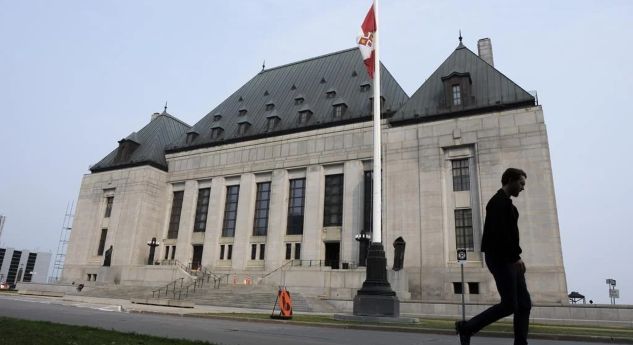
Multani v. Marguerite-Bourgeoys (2006)
In 2001, Gurbaj Singh Multani, a 12-year-old Sikh student, was prohibited from wearing his kirpan (a religious symbol resembling a small dagger) to school by the school board in Quebec. The Supreme Court of Canada ruled that the school board’s decision infringed upon Multani’s freedom of religion under the Canadian Charter of Rights and Freedoms. The Court emphasized that while safety concerns are important, a total ban on kirpans was not a proportionate response. The decision established that schools must accommodate religious beliefs and practices to the point of undue hardship, setting a precedent for the reasonable accommodation of religious rights in educational institutions.
Vriend v. Alberta (1998)
Delwin Vriend, a lab coordinator at a Christian college in Edmonton, Alberta, was fired in 1991 due to his sexual orientation. When he tried to file a complaint, he found that the Alberta Individual’s Rights Protection Act (IRPA) did not protect against discrimination based on sexual orientation. Vriend challenged this exclusion as unconstitutional under the Canadian Charter of Rights and Freedoms. The Supreme Court of Canada ruled that omitting sexual orientation from the IRPA violated the Charter’s equality rights and mandated its inclusion as a protected ground. This pivotal decision led to broader protections for LGBTQ+ individuals across Canadian provinces and territories.
British Columbia (Public Service Employee Relations Commission) v. BCGEU (Meiorin Case, 1999)
Tawney Meiorin, a female firefighter in British Columbia, was dismissed from her job after failing a newly implemented fitness test. Meiorin argued that the fitness standard discriminated against women, as it disproportionately impacted female firefighters. The Supreme Court of Canada ruled in favour of Meiorin, finding that the fitness test was discriminatory and that the government failed to demonstrate that the standard was a bona fide occupational requirement (BFOR). The Court established a new three-part test for determining whether an employment standard that discriminates can be justified as a BFOR:
- The employer must prove that the standard was set for a reason directly related to job performance.
- The employer needs to show that the standard was established with a genuine and sincere belief that it was essential for a valid work-related objective.
- The employer must verify that the standard is crucial for achieving the legitimate work-related purpose and that accommodating the individual would result in undue hardship for the employer.
This decision, known as the Meiorin Test, has significantly impacted how employers design and implement workplace policies and standards, requiring them to consider the potential for discrimination and the duty to accommodate.
British Columbia (Superintendent of Motor Vehicles) v. British Columbia (Council of Human Rights) (Grismer Case, 1999)
Terry Grismer, a person with a visual disability called homonymous hemianopia (H.H.), was denied a driver’s license by the British Columbia Superintendent of Motor Vehicles based on a blanket prohibition for individuals with his condition. Grismer argued that he could compensate for his vision impairment and drive safely using special techniques and adaptations. The Supreme Court of Canada ruled that the Superintendent’s blanket prohibition was discriminatory and that individual assessments were necessary to determine whether a person with H.H. could drive safely.
The Court emphasized that while the Superintendent’s goal of maintaining road safety was legitimate, the policy of denying licenses to all individuals with H.H. without considering their individual circumstances was not reasonably necessary to achieve that goal. The decision affirmed the duty to accommodate persons with disabilities in the context of driver’s licensing and highlighted the importance of considering individual circumstances when assessing the ability to perform a task safely.
Janzen v. Platy Enterprises Ltd. (1989)
In this case, two female employees, Dianna Janzen and Tracy Govereau, experienced ongoing sexual harassment by a male cook at the restaurant where they worked in Winnipeg, Manitoba. The Supreme Court of Canada unanimously ruled that sexual harassment in the workplace constitutes discrimination based on sex, which is prohibited under the Manitoba Human Rights Act. The Court defined sexual harassment as unwelcome conduct of a sexual nature that detrimentally affects the work environment or leads to adverse job-related consequences for the victim.
The decision established that employers are responsible for providing a harassment-free work environment and can be held liable for the actions of their employees. This landmark case paved the way for the recognition of sexual harassment as a form of discrimination under human rights legislation across Canada and highlighted the legal obligations of employers to prevent and address sexual harassment in the workplace.
Canada (Attorney General) v. Grover (No. 1) (1992)
Dr. Chander Grover, a research physicist specializing in optics, was employed by the National Research Council of Canada (NRC). Despite his excellent reputation and initial success at the NRC, Dr. Grover faced a series of discriminatory actions between 1986 and 1990, including the denial of research funds, exclusion from conference participation, and the eventual termination of his employment. The Canadian Human Rights Tribunal found that Dr. Grover had been subjected to discrimination based on his race, colour, and national origin.
The Tribunal determined that two of Dr. Grover’s managers had engaged in a concerted effort to undermine his career progression and that the NRC had failed to take appropriate action to address the discriminatory treatment. The Tribunal ordered various remedies, including an apology from the NRC, compensation for lost wages and the impact on Dr. Grover’s career, and the appointment of Dr. Grover to a position commensurate with his qualifications. This case underscored the importance of addressing systemic discrimination in the workplace and the role of human rights tribunals in providing redress for victims of discrimination.
Role of Human Rights Commissions and Tribunals
Federal and provincial human rights commissions and tribunals play a vital role in enforcing human rights laws in Canada. These bodies, such as the Canadian Human Rights Commission (CHRC) and the Ontario Human Rights Commission (OHRC), are responsible for handling complaints, mediating disputes, and issuing decisions to address instances of discrimination. They provide accessible avenues for individuals to seek redress when their rights have been violated.
Here’s a breakdown of their typical functions:
| Investigating Complaints | Individuals who believe they have been discriminated against can file a complaint. The commission investigates to determine if there is enough evidence to proceed. |
| Mediation | Commissions often encourage mediation between the complainant and the respondent to resolve complaints faster and more cost-effectively. |
| Hearings and Decisions | If mediation fails, the complaint may be referred to a tribunal for a hearing. The tribunal’s decision can include orders for compensation or changes to policies or practices. |
Impact of Human Rights Legislation on Society
The introduction and evolution of human rights laws have profoundly impacted Canadian society. These laws have helped promote equality, inclusion, and diversity in various spheres of life, including education, employment, housing, and public services. They have challenged deeply entrenched discriminatory attitudes and practices, fostering a more inclusive and equitable society.
Anti-discrimination laws have also had significant economic implications. By ensuring equal opportunities and preventing discrimination in the workplace, these laws have contributed to a more diverse and productive workforce. They have helped break down barriers to employment and career advancement for marginalized groups, promoting economic participation and growth.
What Challenges Do We Face Today?
The history of human rights and anti-discrimination laws in Canada has been marked by both challenges and triumphs. From the early days of overt discrimination to the establishment of comprehensive legal protections, the country has made significant strides in recognizing and upholding the inherent dignity and worth of every individual.
However, the work is far from over. As Canadian society continues to evolve, new challenges emerge, requiring ongoing efforts to safeguard and advance human rights. It is essential to remain vigilant, address systemic inequalities, and ensure that the past’s hard-fought gains are not eroded.
The history of human rights and discrimination laws in Canada serves as a reminder of the progress made and the work that still lies ahead. By understanding this history and the impact of these laws on society, we can continue to build a more just, equitable, and inclusive Canada for all.
In 2026, new challenges increasingly relate to digital privacy, algorithmic bias, the responsible use of artificial intelligence, and the ongoing work of implementing national plans on Indigenous rights and employment equity. These areas demonstrate that Canada’s human rights landscape continues to evolve, requiring updated legal frameworks to address emerging forms of discrimination.