The Magna Carta matters today because it introduced the rule of law, due process, and limits on government power – principles that still shape Canadian rights and constitutional thinking. In 2015, Canadians had a rare chance to see this 800-year-old document during its cross-country tour, a moment that continues to spark discussion in 2025 about how historic guarantees of fairness still influence modern governance.
You know, it’s not every day that an eight-century-old charter travels across Canada. But that’s exactly what happened in 2015 when the Magna Carta went on a national tour. As a history enthusiast, I was thrilled – how often do you get to stand in front of the document that helped lay the foundations for many of the rights we rely on today? Looking back from 2025, it’s remarkable to see how that exhibition still appears in museum programs, media conversations, and legal-history courses, reminding us how deeply this medieval charter continues to shape modern Canada.
The tour, organized by Magna Carta Canada, brought this ancient charter to some pretty impressive venues. I was particularly excited about its stop at the Canadian Museum of History in Ottawa-Gatineau. Just imagine, standing in front of a document that’s shaped our laws for centuries.
Legal Heritage: Connecting Magna Carta with Ontario’s Gambling Laws
The principles of accountability and transparency that the Magna Carta established in 1215 have evolved into sophisticated regulatory frameworks across Canada. Today, these medieval concepts of limiting absolute power and ensuring fair treatment manifest in unexpected ways. Take Ontario’s approach to digital entertainment, for example – the province has developed one of the most rigorous licensing systems in North America. Understanding which operators meet these stringent standards is crucial, and players can consult detailed security ratings and licensing verification for the safest online casinos in Canada, seeing how provincial regulators apply these centuries-old principles of justice to modern digital spaces, ensuring every operator meets the same rule-of-law standards that once challenged King John’s authority.
How Magna Carta Principles Shape Modern Regulation:
| Medieval Principle | Modern Application in Ontario |
|---|---|
| Rule of Law (1215) | Mandatory AGCO licensing for all operators |
| Due Process | Fair dispute resolution mechanisms |
| Accountability | Regular audits and transparency requirements |
| Protection of Rights | Responsible gambling safeguards |
The Magna Carta’s influence on legal systems is still felt today, even in areas like online gaming. Ontario’s gambling laws, which focus on fairness and protecting players, are rooted in the same principles of justice and rule of law that the Magna Carta introduced. Just as the Magna Carta limited the king’s power, Ontario’s regulations ensure that online platforms operate fairly and transparently, safeguarding players’ rights. Many of the best Ontario online casinos reflect these values, with legally compliant providers upholding standards of fairness and transparency.
Ontario’s gaming framework also provides a structured environment where operators must adhere to strict licensing requirements. These requirements ensure that games are fair and help protect vulnerable players by enforcing responsible gambling measures. The province’s regulatory body, the Alcohol and Gaming Commission of Ontario (AGCO), plays a key role in monitoring and enforcing these rules, ensuring that all operators meet the highest standards of integrity and player protection.
By 2025, Ontario’s online gaming system has evolved even further. The AGCO and iGaming Ontario introduced updated advertising restrictions, mandatory responsible-gaming dashboards, stricter identity verification rules, and clearer RTP disclosure standards. These changes strengthened transparency and brought the system closer to the Magna Carta’s foundational principles of accountability and fairness. Today, Ontario is considered one of the most strictly regulated and safest online gaming markets in North America. Understanding how these principles evolved helps us appreciate their origins and the historical context in which they were created. This takes us back to the very beginning, with the story of the Magna Carta itself.
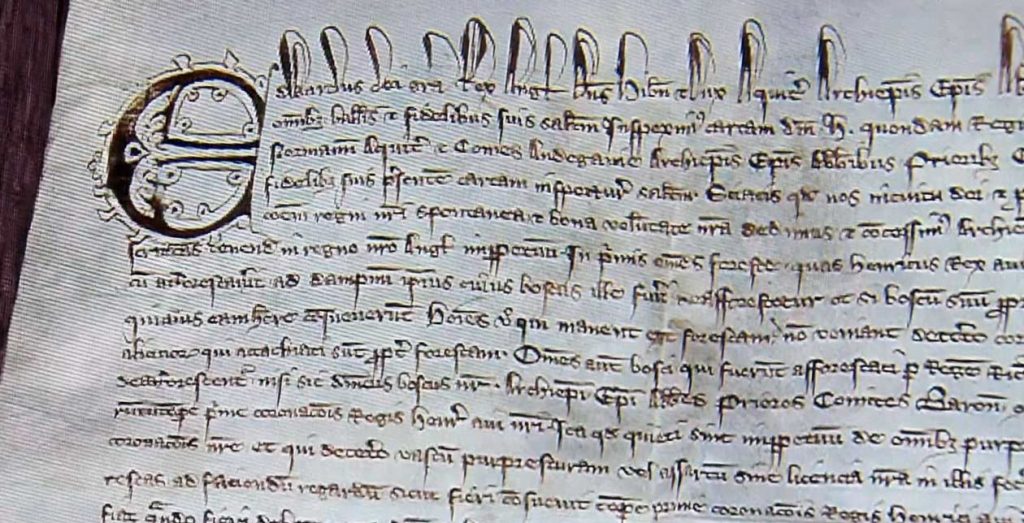
A Bit of Background on the Magna Carta
Before I dive into the tour details, let me give you a quick history refresher. Back in 1215, England was ruled by King John. Now, this guy wasn’t winning any popularity contests. He was known for being a harsh ruler, and his barons had finally had enough. They rebelled, and the result was the Magna Carta – a charter that basically told the king, “Hey, you need to follow the law too!”
It is funny how King John has become such a villain in popular culture. If you’ve ever watched a Robin Hood movie, you will know what I mean. But it is this bad reputation that really highlights why the Magna Carta was so important. It was a way to keep the king’s power in check.
What’s really cool is how the Magna Carta has popped up in unexpected places recently. Did you know that in 2013, Jay-Z named an album “Magna Carta… Holy Grail”? Talk about bringing history into the 21st century.
The Big Ideas in the Magna Carta
So, what made the Magna Carta such a big deal? It introduced some pretty revolutionary ideas for its time:
- Rule of Law: This means everyone, even the king, has to follow the law. No exceptions.
- Habeas Corpus: You can’t just throw people in jail without a good reason.
- Trial by Jury: The right to be judged by your fellow citizens, not just by the king or his cronies.
- Early Women’s Rights: It gave widows some protection for their property. Not perfect, but it was a start.
These ideas didn’t just stay in England. They spread around the world and influenced other important documents like the U.S. Constitution and our own Canadian Charter of Rights and Freedoms.
An Indigenous Magna Carta?
Here is something I found really interesting. In Canada, we have our own version of a “Magna Carta” for Indigenous rights. It’s actually two documents – the Royal Proclamation of 1763 and the Treaty of Niagara of 1764. These set out some important principles for how the Crown should interact with Indigenous peoples. It is fascinating to see how the idea of codifying rights has played out in different contexts. In 2024-2025, discussions about treaty rights, land stewardship, and nation-to-nation relationships continue to evolve across Canada. The Royal Proclamation and Treaty of Niagara remain central reference points in these conversations, reinforcing how foundational rights documents continue to shape policy and reconciliation efforts today.
The 2015 Tour: Bringing History to Life
Now, let’s talk about the tour itself. The Canadian government put up $500,000 to bring the Magna Carta and its companion document, the Charter of the Forest, to Canada. That is a pretty penny, but I’d say it was worth it to give Canadians a chance to see these historic documents up close.
The tour made four main stops:
- Ottawa/Gatineau: Canadian Museum of History (June 12 – July 26, 2015)
- Winnipeg: Canadian Museum for Human Rights (August 15 – September 18, 2015)
- Toronto: Fort York National Historic Site (October 4 – November 7, 2015)
- Edmonton: Legislative Assembly of Alberta Visitor Centre (November 23 – December 29, 2015)
Each location offered something unique. I particularly liked how the Canadian Museum of History in Ottawa-Gatineau kicked things off. It’s right across from Parliament Hill, which seemed fitting for a document about limiting government power.

The exhibition wasn’t just about looking at old parchment (though that was pretty cool). They had a 12-minute film explaining the historical background, interactive displays, and even a new book called “Magna Carta and its Gifts to Canada.” As a history nerd, I was in heaven.
Why the Magna Carta Still Matters
You might be wondering, “Why should I care about some 800-year-old document?” Well, the principles in the Magna Carta are still super relevant today. They underpin a lot of our laws and rights in Canada:
- Rule of Law: This is why our government can’t just do whatever it wants.
- Due Process: It’s the reason we have fair trials.
- Individual Rights: Our Charter of Rights and Freedoms has its roots in the Magna Carta.
- Limits on Government Power: It’s all about checks and balances.
- Indigenous Rights: Remember that “Indigenous Magna Carta” I mentioned? It’s part of this legacy too.
The tour got people talking about these issues. It made us think about how we can apply these old principles to modern problems, like balancing security and individual rights.
In 2025, these principles feel even more relevant as Canada faces new questions about digital rights, data privacy, artificial intelligence, and government accountability in an increasingly connected world. Discussions around algorithmic decision-making, biometric identification, and online surveillance echo the same concerns about fairness and limits on power that the Magna Carta first addressed centuries ago. Legal scholars and educators across Canada continue to reference the charter when exploring how modern laws can protect individuals in the digital age, showing that its legacy still shapes debates about transparency, justice, and responsible governance.
The Impact of the Tour
I’ve got to say, seeing the Magna Carta in person was pretty inspiring. It really brought home how a document from 800 years ago still shapes our laws and rights today. From the Canadian Museum of History in Ottawa-Gatineau to the Edmonton legislature, the tour gave Canadians a chance to connect with their legal and constitutional heritage.
It was a reminder of why we need to keep protecting individual rights and the rule of law. These aren’t just dusty old ideas – they’re the foundation of our free society.
As we face new challenges, I think the principles of the Magna Carta can still guide us. The tour encouraged us to think about these old ideas in new ways. Whether you saw it at Fort York in Toronto or the Canadian Museum of History in Gatineau, the Magna Carta serves as a powerful symbol of our ongoing struggle for rights and freedoms.
Ten years later, the impact of the tour is still evident across Canada. Between 2020 and 2025, several museums launched permanent or fully digital exhibits inspired by the 2015 showcase, making the Magna Carta accessible to new audiences through virtual archives and interactive online timelines.
The document has also become a recurring reference point in school programs on civil rights, constitutional history, and democratic accountability, with teachers using the charter to connect historical principles to modern discussions about privacy, governance, and individual freedoms. The tour didn’t just bring a medieval manuscript to Canadian cities – it helped spark a long-term national conversation about the rule of law and the foundations of our rights in the digital age.
In the end, the Magna Carta Canada Tour wasn’t just about looking at an old piece of parchment. It was about connecting our past to our present and thinking about how we can build a better future. And that, I think, is pretty awesome.
Just want to make it clear that this article is my personal take on the Magna Carta Canada Tour. I am not affiliated with the organizers or any official bodies – I’m just a history enthusiast sharing my thoughts and observations about this cool event. While I’ve done my best to get the facts right, this isn’t an official account. If you’ve got any questions about the content or spot anything that seems off, feel free to drop me an email at [email protected]. I’m always happy to chat about history and learn more. This 2025 update reflects my ongoing interest in how historical documents continue to shape modern policy and digital-era rights. While I’ve added the latest context, this remains a personal interpretation, not an official record.